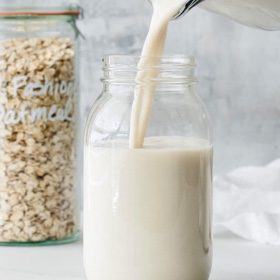
Oat Milk (Non-Slimy)
Drink - non-alcoholic
Ingredients
1 cup rolled oats
4 cups ice cold water
1-2 tablespoon maple syrup (optional)
1 teaspoon vanilla extract (optional)
pinch of salt (optional)
Description
PREP TIME: 10 mins
TOTAL TIME: 10 mins
This is one of the creamiest dairy-free milks with just the right amount of sweetness and perfect for those with nut sensitivities.
When it comes to choosing oats, rolled oats are your best option. Quick oats are too processed (which can create more slime) and steel cut oats are not processed enough.
But always make sure to buy certified organic, gluten free oats. Many commercial oats are processed in facilities that are contaminated by grains such as wheat, barley, or rye. And non-organic oats have been tested to have unsafe levels of glyphosate, an herbicide you definitely want to avoid.
WAYS TO USE OAT MILK + TIPS
Homemade oat milk works great in baked goods, smoothies or cold beverages. But it’s not the best option for hot beverages as it may thicken up and become slightly slimy again. Because it lacks fat (unlike nut milks), it doesn’t froth well either. I did try adding a little coconut oil, but it still didn’t froth well (in my opinion).
When adding a sweetener to your oat milk I recommend maple syrup rather than a date. Because the blend time is so short, a pitted date may not fully blend into the liquid.
Directions
Add oats, water, and any additional sweeteners to a high powered blender.
Blend for 20-30 seconds. Make sure to not over-blend.
Strain the oat milk mixture by pouring through a nut milk bag or thin towel over a large mixing bowl or pitcher. If you'd like, you can double strain the mixture to make sure all the sediment is removed.
Transfer the oat milk to a sealed container and store in the fridge (for up to a week).
Notes
HOW TO AVOID SLIMY OAT MILK
The number one complaint of homemade oat milk is that it’s slimy. But you’re in luck. After testing more than 6 batches of oat milk, I have a few tips:
Use ice cold water: heat can make the oats more starchy and gummy (just think what happens when you make oatmeal), so use ice cold water or swap a cup of water for ice cubes when blending.
Don’t overblend: if you blend the ingredients too long they’ll start to warm, and you’ll run into the same problem I just mentioned above. Don’t blend for more than 30 seconds.
Strain well: strain through a high-quality nut milk bag with a very tight weave. I hardly have any sediment in mine when I use this nut milk bag, but you could use dish towels as well. Just don’t use a strainer or cheesecloth as it’s not tightly woven enough.
Don’t over squeeze: as you’re straining and squeezing the oat milk in the nut milk bag, be gentle. You don’t want to squeeze firmly like you do with almond milk as you’ll squeeze out more of the starchy compounds.
HOW TO MAKE OAT MILK THE LEAST SLIMY
If you’d like to go a step further and make your oatmilk the least slimy possible, there’s one more trick: enzymes.
After reading how Oatly processes their milk with enzymes I decided to try the same concept with store-bought digestive enzymes. Here’s what I did:
Added oats to a bowl and covered with an inch of water.
Opened two capsules of digestive enzymes and stirred those in the bowl with oats and water, then let it sit for 15 minutes.
Strained the mixture over the sink and rinsed it good with water from the faucet.
Transferred the washed oats to the blender along with 4 cups of cold water.
Blended the oats for 20-30 seconds.
Strained the oat milk through a nut milk bag.
Stored the oat milk in a sealed container in the fridge.
This was BY FAR the least slimy oat milk option. Why? It’s due to the amylase. Digestive enzymes are typically broad spectrum, with a variety of enzymes to break down many foods, including sugar (sucrase), fat (lipase), protein (protease) and carbs/starch (amylase).
It’s that last enzyme that’s most important to oat milk though. The amylase breaks down the oat starches and makes the oat milk non-slimy.
Nutrition
CALORIES: 19kcal, CARBOHYDRATES: 3g, PROTEIN: 1g, FAT: 1g, SATURATED FAT: 1g, SODIUM: 1mg, POTASSIUM: 18mg, FIBER: 1g, SUGAR: 1g, CALCIUM: 3mg, IRON: 1mg